Forest Bathing
The Who, What, Where, When, Why and How of Forest Bathing.
Who: Everyone! It is estimated that the average person spends 90% of their time inside. We all need to get into nature. Science shows time in nature lowers stress, improves cognitive function as well as a general sense of well being.
What: This is a grounding activity rooted in the Japanese practice of Shinrin-yoku. Walk slowly, observe deeply, connect with the forest, breath fully. This is not exercise. This is an intentional walk and immersion in nature.
Where: You can forest bathe anywhere there is nature. Ideally, you would have a space you can go to frequently to notice the changes in season. Notice how the space has changed in temperature, smells and life. If your spot it to far, and remote you may not get there more than once a year. Find a space that allows consistant practice.
Ideas:
Local woodlands or state parks
Urban parks, botanical gardens, or arboretums
Your own backyard
By a river, creek, or beach
Can't get outside? Simulate the experience, use a woodsy essential oil, listen to sounds of the forest, be near an open window. Bring life near.
When: Ideally 120 minutes at least once a month. Learn more about the 20/5/3 Rule. But if 120 minutes isn’t realistic then 20 minutes-3 times a week.
Why:
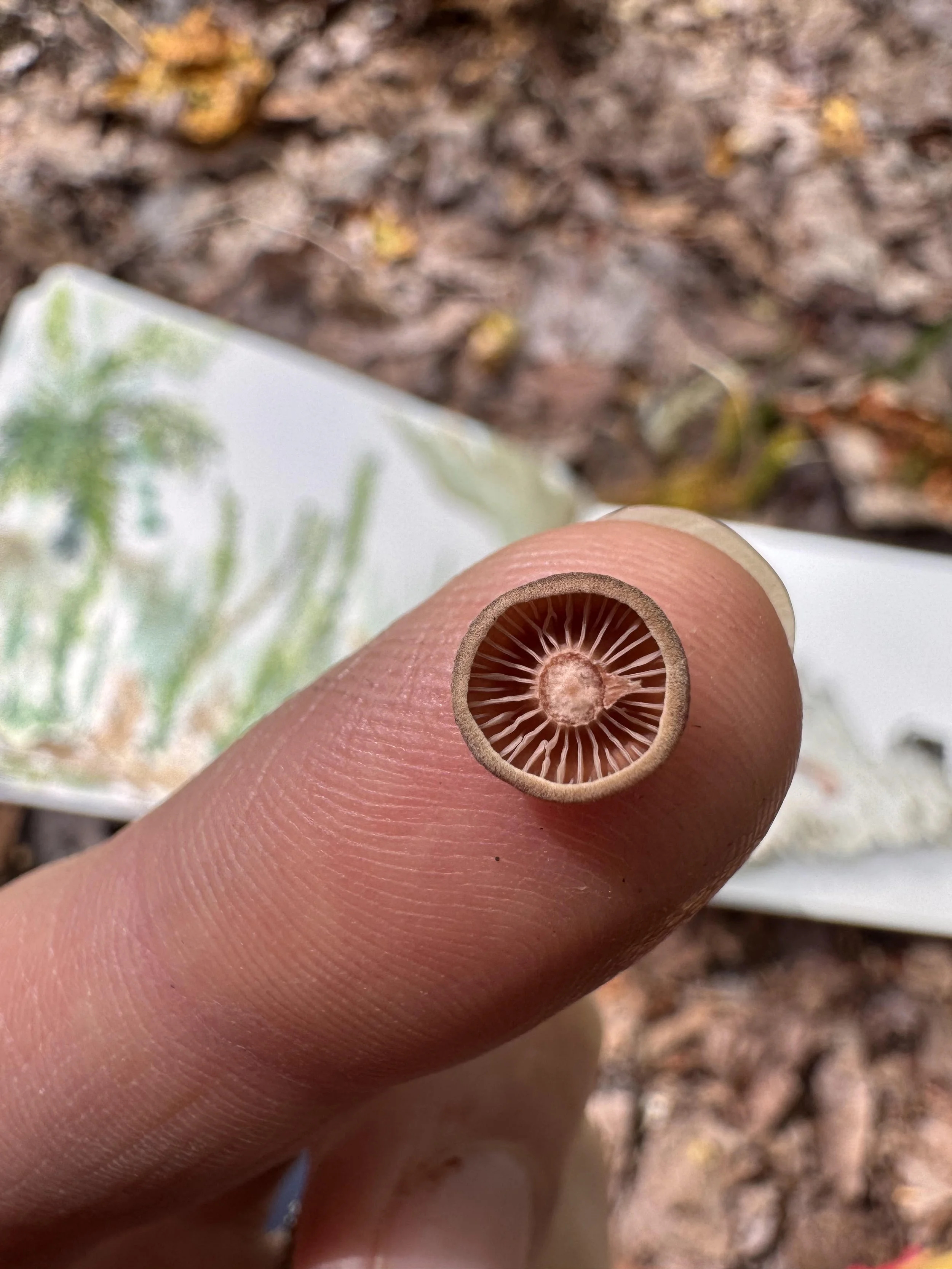
begin to notice the tiny details around you.
Physical Benefits:
Better immune system function
Decreased sensory pain response
Lower cholesterol
Reduced risk of diabetes
Reduced risk of heart disease and high blood pressure
Slower pulse rate
(UT Southwestern Medical Center)
Mental Health:
feeling of calm
Significantly reduce symptoms of depression and anxiety
improve memory
stress reduction
How:
Dress in loose-fitting, layered clothing.
Use sunscreen and insect repellant and consider wearing a hat and sunglasses.
For longer experiences, carry a snack and water.
During “Sit Spot” you may choose a sit upon or blanket
Ideally you are screen free! Minimize distractions by putting your devices on airplane mode. Many people use their phone as a camera. Use it, but make sure that you are not accessing the distractions.
If you choose, plein-air supplies such as a sketch book or watercolors.