forget-me-not
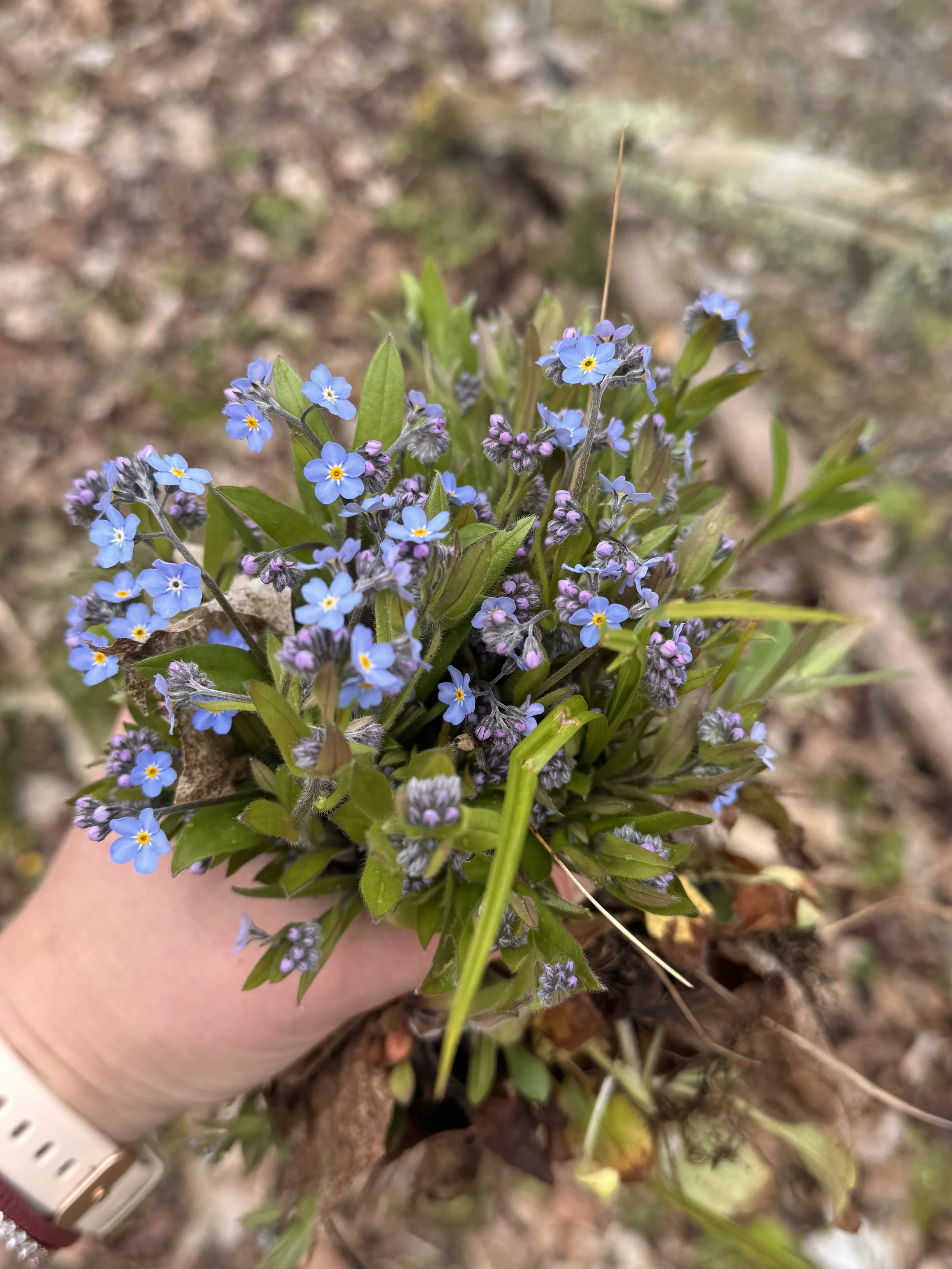
The first spring we moved into our home, our yard erupted with the small periwinkle flower called; the forget-me-not. We were overcome with excitement for this beautiful sea of blue. A few weeks later a friend came to our new home and I shared my delight with all of our flowers. She so sweetly stated, “Yes, but a bummer it is so invasive. Soon, you won’t have anything but.”
My heart sank.
How do I BEGIN to manage this highly invasive plant that has literally taken over my yard. As new homeowners with far too much to tend to, I decided it was too late. It would have to wait until next year as the seeds were already spreading.
Fast forward one year, to look at my yard as a whole, it became crushing. How was I ever going to get ahead of this? I started with the goal of one five-gallon bucket each day. Fill the bucket in one area, move on to the next.
Now in my second year, I acknowledge that this is my annual campaign. If I look at my yard as a whole, I'm crushed with dread. It is a monumental task. But- I am motivated to keep going.
Why you may ask?
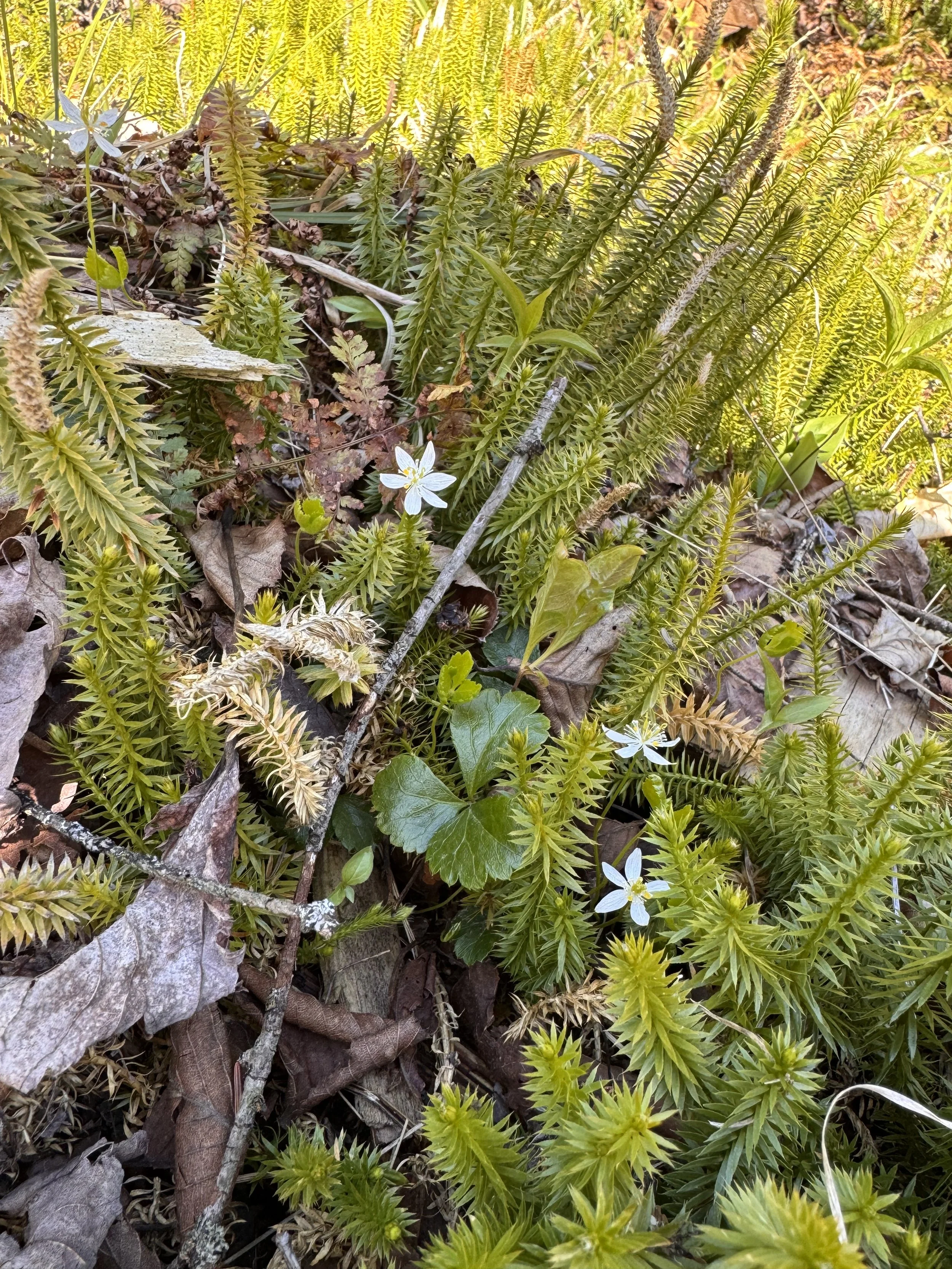
Sweet natives with space to be!
Because, this year as I am sifting foot by foot, I am finding an abundance of native species I did not see last year. I am finding more Jack-in-the-Pulpit, trillium, flowering trout lilies, the sweetest white flowers I have no idea its name, and many more. After reading the book Braiding Sweet Grass By Robin Wall Kimmerer, I acknowledge I am a steward of this land, as with that comes great responsibility, to care for this space I get to call home.
Unfortunately, I don’t have time to do a 5-gallon bucket, it's May: The Mother’s Marathon. This is the month of needing to be in two places at once. We are finishing all things spring, while simultaneously starting all things summer! We need to be at the spring and summer sport practice, the spring end-of-year celebration, as well as prepping for summer camp.
I see you. We’re exhausted.
But still, I must pick. I had to make changes to make this task manageable. I have divided my yard into slices. I found a two-gallon bucket instead of five. I set my phone timer for 10 minutes and I am paying my boys 1 cent a plant. This seems a more manageable task and the added bonus, there is WAY less than last year. If I keep at this, the task will be less daunting in the future. Just like disciplining a child, the discipline of stewardship will also pay dividends.
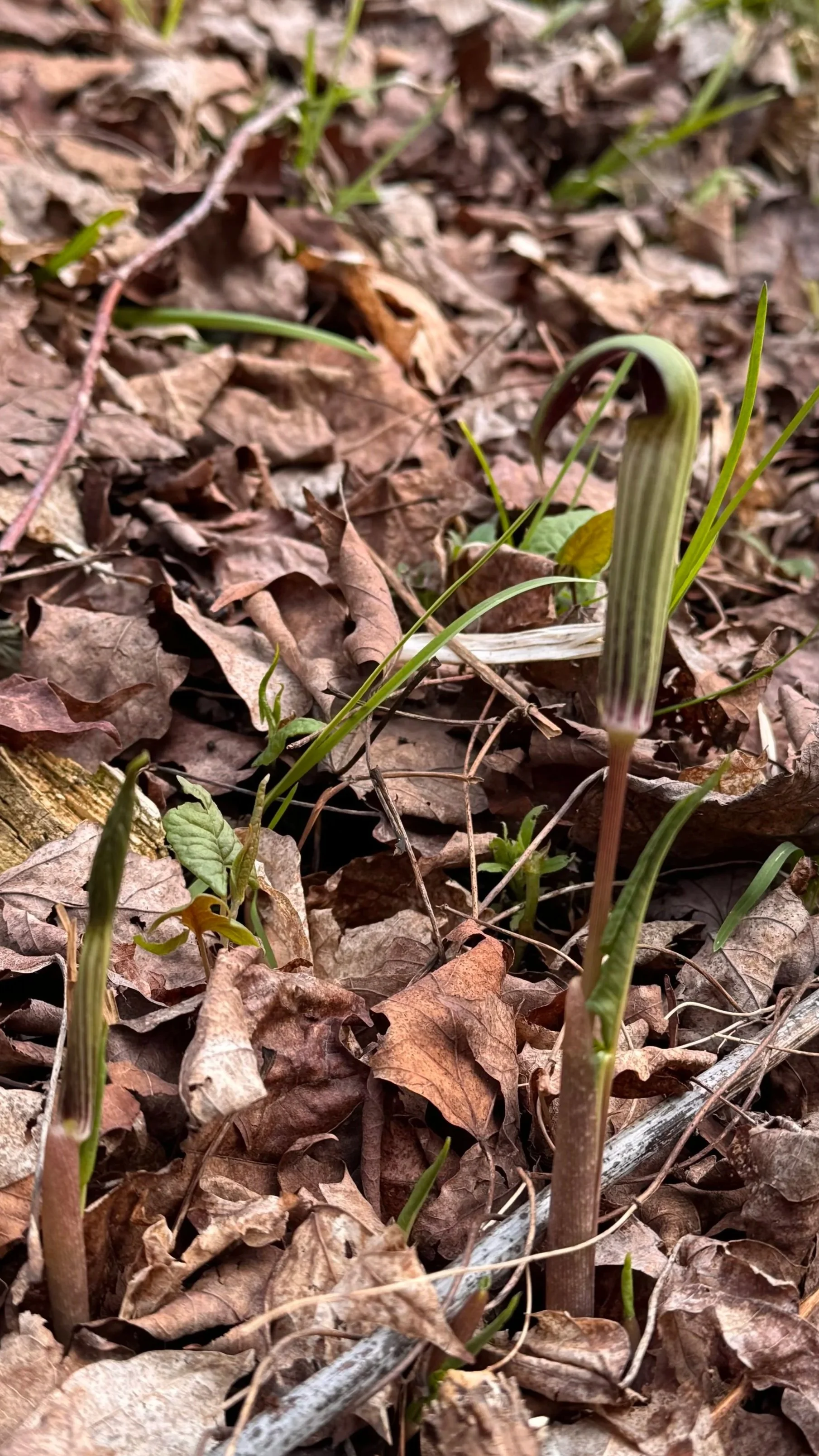
As I pick bucket after bucket, this land I love and value is being protected for future generations. Biodiversity increases, healthier native species flourish, and the ecosystem has space to thrive.
This Week’s A Door Within:
What is a realistic expectation for yourself?
How can you modify your intent to fit your current needs?
In what ways are you a steward?